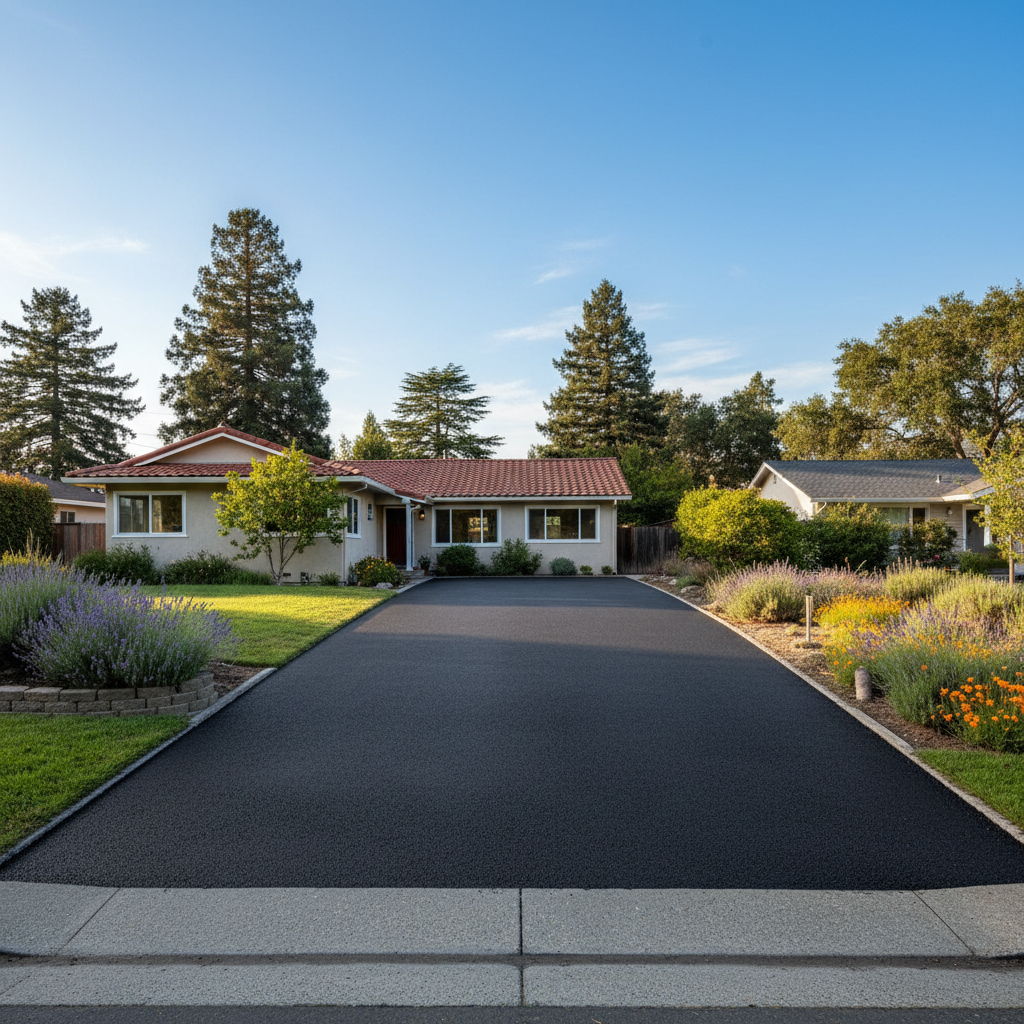
Alright, let's talk about residential asphalt paving costs here in Burlingame. I get it; you want a smooth, durable driveway, but you don't want to break the bank or get ripped off. That's a common concern, and frankly, a lot of folks just throw out numbers without explaining what's behind them. I'm here to give you the straight scoop, based on what we see every day with Burlingame Asphalt Solutions.
What Really Drives the Price Tag?
When you're looking at a quote for a new asphalt driveway, there isn't just one number. A bunch of factors play into that final price, you know? It's not just about the square footage, though that's definitely a big part of it.
- Project Size and Scope: This is probably the biggest factor. A larger driveway naturally needs more material and more labor. Are we just paving a simple, flat rectangle, or is it a winding driveway with curves and multiple parking areas? More complex shapes or areas with obstructions will add to the labor.
- Existing Conditions & Site Preparation: This is huge, especially around here. If you've got an old, failing driveway that needs to be torn out and hauled away, that's going to add to the cost. And let's be honest, Burlingame's soil can be tricky. We often deal with areas that need significant grading, excavation, or a reinforced sub-base to ensure proper drainage and stability. Ignoring this step is a recipe for premature cracking and sinking, and that'll cost you more down the line. Installing 8 to 10 inches of gravel below the asphalt, for example, can run you about $1 to $2.50 per square foot.
- Asphalt Thickness and Type: For most residential driveways, a 2 to 3-inch layer of hot mix asphalt is standard. But if you've got heavier vehicles, like an RV or a work truck, or if you're parking heavy trailers, you might need a thicker 3-inch layer or even more. More material, thicker layers, means more cost.
- Material and Labor Costs: Asphalt material itself accounts for a good chunk of the cost, usually about 40-50% of the total. These prices can fluctuate with crude oil prices since asphalt is petroleum-based. Labor costs in the Bay Area are generally higher than national averages, sometimes 15-25% more, due to the cost of living and demand.
- Drainage Solutions: Proper drainage is non-negotiable here. With our rainy season, water pooling can quickly undermine your asphalt. If your property needs new French drains, catch basins, or significant grading to ensure water runs off correctly, those are necessary additions.
- Accessibility: If your driveway is hard to get to for our equipment—like a narrow, winding path up a hillside property—it can add to the labor time and complexity, increasing the cost.
Typical Cost Ranges You Can Expect
Alright, let's get to some numbers. I know you don't want to hear