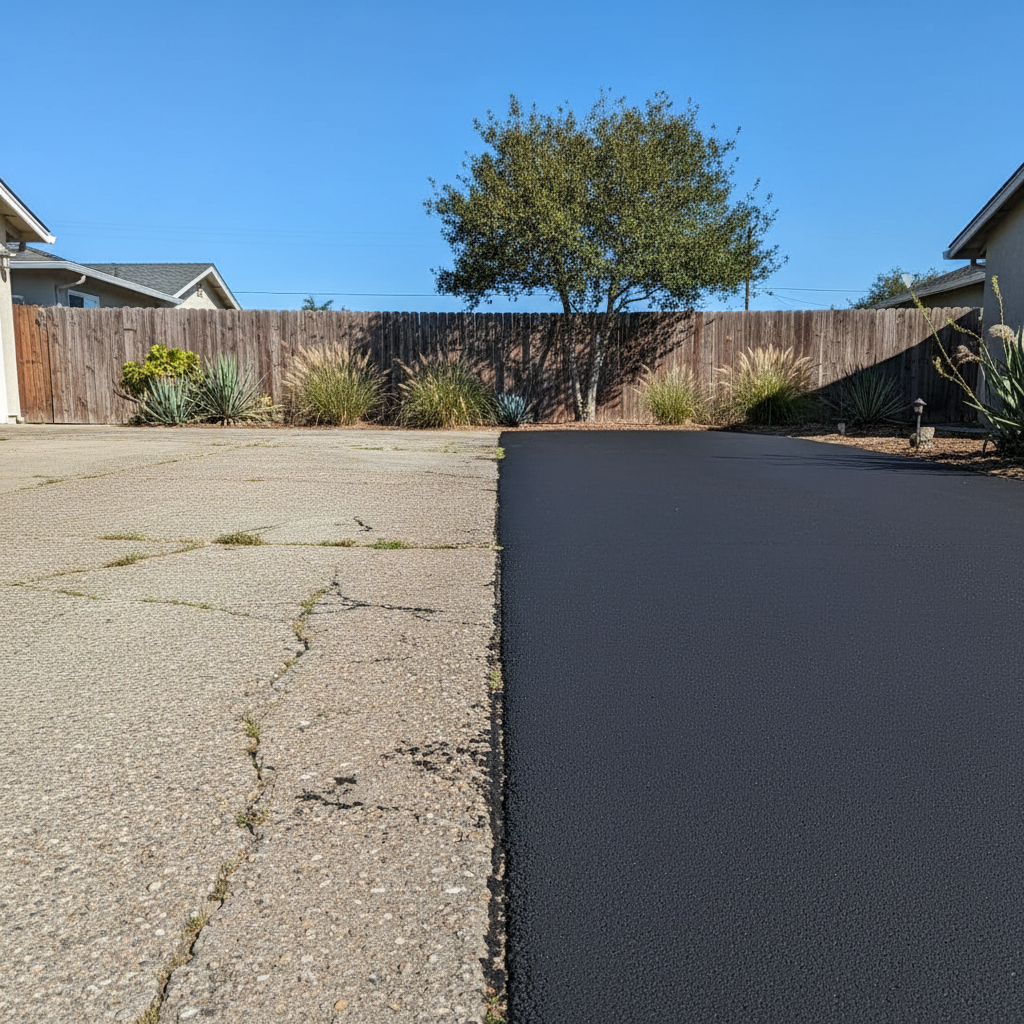
So, you're thinking about getting your driveway slurry coated. Smart move, really. It’s one of the best ways to protect your asphalt and keep it looking sharp. But when you start digging into it, you’ll hear about different kinds of slurry. Things can get confusing fast, and honestly, I've seen folks pick the wrong one and really regret it later.
Here in Burlingame, especially with our mild but sometimes pretty wet winters and those hot summers, picking the right slurry isn't just about the price tag. It’s about what’s actually going to hold up best for your home. We're mainly talking about two options here: Type II and Type III slurry. Let's break down what each one means for your asphalt.
Type II Slurry: Your Everyday Workhorse
Type II slurry is probably what most people picture when they hear 'slurry coat.' It’s a mix of emulsified asphalt, water, fine mineral aggregate (think sand), and some chemical additives. Its job? To fill small cracks, boost skid resistance, and give you a fresh, uniform black surface. You can think of it as a thicker, more robust version of a standard sealcoat.
Cost & Application
Generally, Type II is the more budget-friendly choice upfront. It's also a bit easier to apply smoothly, which often means lower labor costs. For a typical residential driveway — say, in the Lyon Hoag neighborhood — this is usually the go-to for a good refresh without emptying your wallet.
Durability & Maintenance
It’ll definitely make your asphalt last longer. It shields against UV rays, keeps water from seeping in, and handles general wear and tear. You can usually expect a good 5-7 years from a properly applied Type II slurry, maybe even more if your driveway doesn't see a ton of heavy traffic. Maintenance is pretty minimal – just keep it clean, and try not to let oil or gas spills just sit there.
Appearance
It gives a nice, dark, uniform finish. It’s not super coarse, so it looks clean and tidy. If you’ve got a lot of minor surface imperfections, Type II does a pretty good job of hiding them, making everything look new again.
Type III Slurry: The Heavy-Duty Protector
Now, Type III slurry is a different animal altogether. It uses a coarser aggregate than Type II – imagine larger, more angular stones. This results in a much more durable, wear-resistant surface. Basically, it’s a beefed-up version designed for areas that take more abuse.
Cost & Application
You're going to pay more for Type III, no two ways about it. The material itself costs more, and it can be a bit trickier to apply smoothly because of those larger aggregates. It really takes a skilled crew to get it right. For a larger commercial lot, or a residential driveway that sees a lot of heavy vehicles or turning traffic, that extra cost is usually well worth it.
Durability & Maintenance
This is where Type III truly shines. Thanks to that coarser aggregate, it stands up to traffic and abrasion much, much better. We’re talking 7-10 years, sometimes even longer, especially if it’s put down correctly over a good base. It’s excellent for preventing rutting and shoving, which can be a real headache on driveways with steep grades or lots of turning movements. Maintenance is similar to Type II, but it's just tougher overall, you know?
Appearance
The finish of Type III is noticeably coarser. It’s not as smooth as Type II, and you’ll definitely see the texture of the larger aggregate. Some people actually prefer this more rugged look, especially for bigger areas or if they need maximum skid resistance. It definitely has a more industrial feel, if that makes sense.
My Recommendation for Burlingame Homeowners
For most residential driveways in Burlingame – your typical single-family home with one or two cars – I’d usually suggest a good quality Type II slurry. It offers great protection, looks fantastic, and lasts a solid amount of time for a reasonable cost. It's truly a fantastic value.
However, there are absolutely situations where Type III makes more sense. If you’ve got a long, heavily used driveway, maybe you run a home business with frequent deliveries, or you have a particularly steep incline where you need extra traction and durability, then Type III is absolutely worth the investment. It’ll handle the abuse better and last longer, ultimately saving you money in the long run by extending your pavement’s life even further.
The main thing is to have an honest chat with your contractor about your specific needs, your budget, and the condition of your existing asphalt. We at Burlingame Asphalt Solutions always take a look at your driveway, consider how you use it, and then give you our best advice on whether Type II or Type III is the smarter play for your situation. Don't just pick the cheapest option; pick the one that's going to serve you best for years to come.